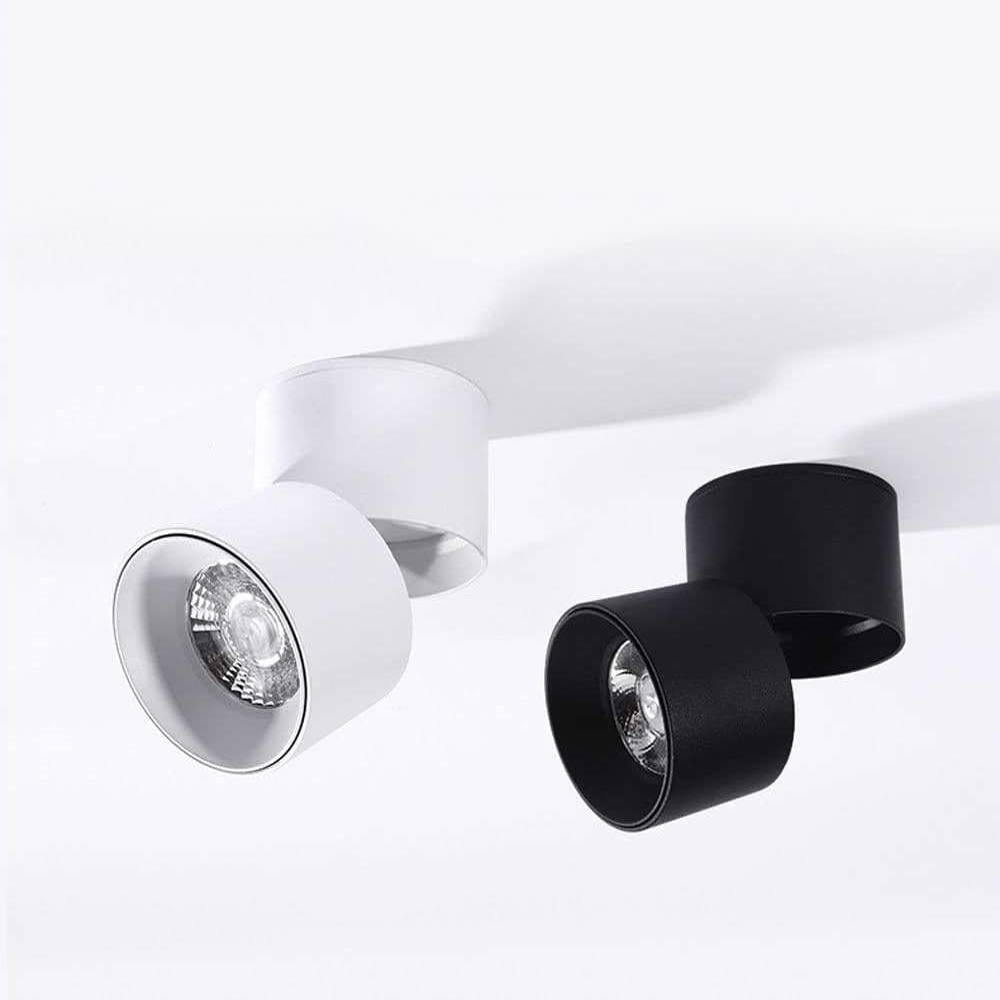
A spotlight for a small object on a shelf serves a different job from one lighting the shelf from end to end. Before choosing a beam, mark what needs light, how wide it is and where the track sits. Then walk through the room to see where a bright source or its reflection might enter your view.
Beam width and distance
A beam angle is commonly measured between the two directions where light intensity falls to half its value along the main beam. At the same distance, a narrow beam makes a smaller patch of light. A wider beam spreads across a larger area. The lit patch also grows as the distance between the fitting and the target increases.
On a display shelf, try lighting one item with a narrow beam and testing a wider beam for the shelf as a whole. Look at the shelf edges and the wall behind it. Light outside the target can change which detail draws your eye when you approach the display.
Glare and reflected light
Check a glazed print, glossy counter or glass cabinet from the position a customer actually uses. Try a small change in aiming and walk the same route again. A direct view of the source and a reflection in a shiny surface can occur at different positions. In an indoor lighting assessment, unified glare rating (UGR) depends on the installation and factors including observer position and direction of view.
Aiming checklist
- Mark the target size, track position and distance on the plan.
- Confirm the beam and the adjustment range for the exact model.
- Check for bright reflections from seated and standing positions.
Compare Magnetic lighting modules and Cylindrical lighting for your shortlist. Test the aiming on one target before using the same setting across a wall or display.
Sources
From the RAYVON catalog