Sketch the route someone takes through a room, then mark what you want that person to see. In a living room, the route might run from the door to a seating area, with a framed print as the focal point. In a shop, it could run past shelves toward the counter. The route and the focal point call for different distributions of light.
General light for the room
General lighting helps people see their surroundings and move through them. Mark entrances, circulation paths and surfaces that need enough light for everyday use. A linear panel can be a candidate when its distribution suits the area it will cover. Check the edges of the lit area and the transition to the next room.
Directional light for selected details
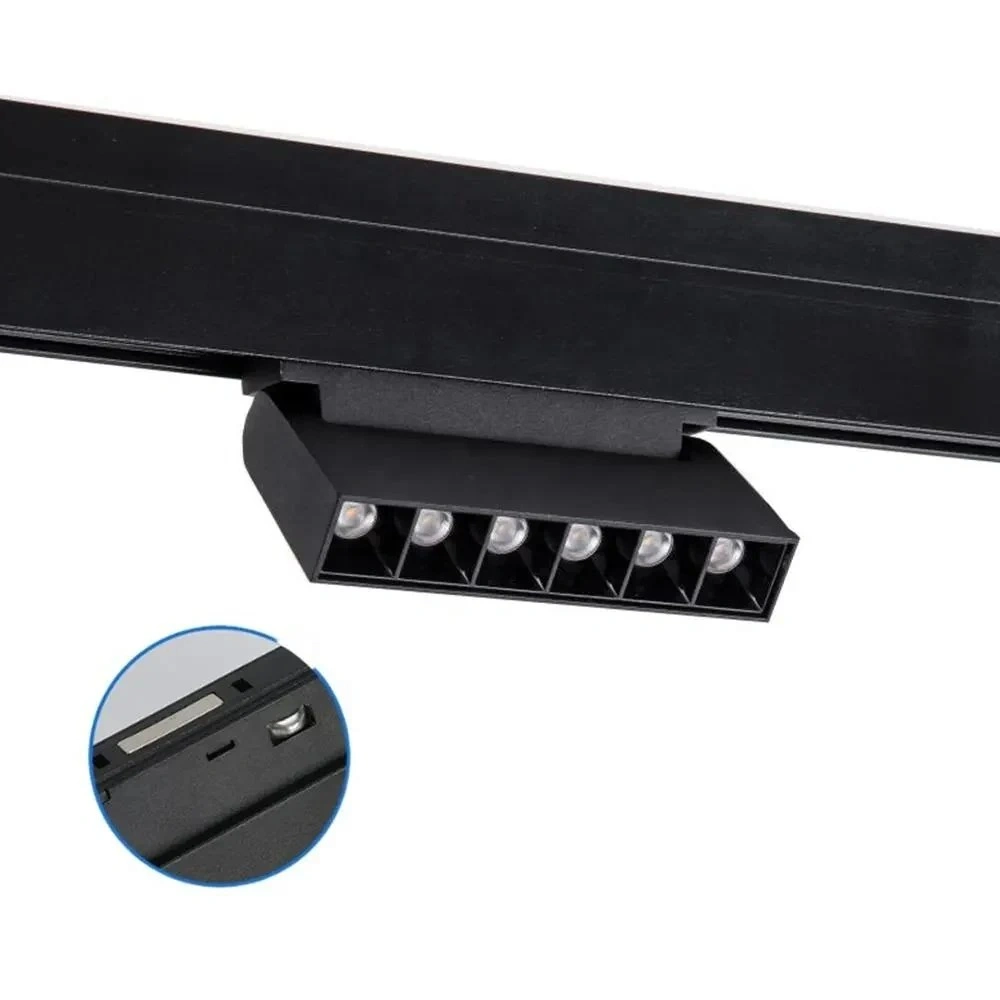
Accent lighting picks out a surface, object or feature. Use a directional module as a candidate for a picture, a textured wall or a display. Pick the beam with the size of the target and the mounting distance in mind. Look from the entrance and from the main seating or standing position. Decorative light has a separate role when sparkle or a visible light element is part of the design.
Test the general light first. Add the accents and adjust their direction while looking at the room as a whole. In a changing display, reserve room on the track for a future module position and confirm the system permits that layout.
Layout checklist
- Mark routes and targets on the same drawing.
- Assign a role and position to each linear or directional module.
- Check the overlap and visible reflections in a sample setup.
Compare Magnetic track rails for the layout and Magnetic lighting modules for the light distribution. Check system compatibility before finalising the combination.
Sources
From the RAYVON catalog